domingo, 14 de febreiro de 2016

venres, 29 de xaneiro de 2016
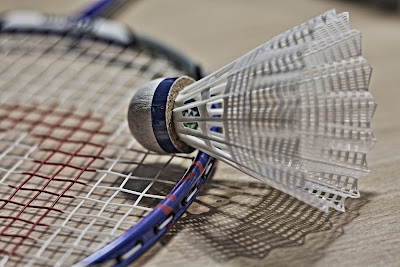
Badminton unit
O bádminton é un deporte facilmente adaptable ás necesidades e obxectivos da materia de Educación Física, dadas as súas características relativas ao material, espazo, practicantes e aspectos técnico-tácticos. Dada a súa versatilidade, ofrécenos a posibilidade de xogalo desde unha óptica meramente lúdica, sinxela e asequible para a inmensa maioría do alumnado, como practicalo na súa vertente máis competitiva (totalmente secundaria nesta unidade) na que se esixe un maior dominio deste deporte. A esta particularidade engádenselle ademais outros aspectos positivos como:
- Non se require dunha fase de introdución excesivamente longa: desde o principio pódese lograr unha práctica máis ou menos continuada.
- É unha actividade non sexista: apenas existen diferenzas entre a práctica realizada polo rapaces e as rapazas.
- É fácil adaptar a súa práctica a diferentes grupos de idades e niveis de xogo.
- Ofrece outros modelos alternativos de actividade física para empregar no tempo libre.
- Permite desenvolver habilidades e destrezas que non se desenvolven noutros deportes máis convencionais.
- Moitos dos xestos técnicos son transferibles a outros deportes análogos.
- Contribúe a un estilo de vida saudable e de mellora da condición física dun xeito lúdico.
domingo, 20 de decembro de 2015
A Canadian experience - PIALE Integración

Durante o pasado mes de outubro participei dunha estadía en Canadá, enmarcada no programa PIALE.
O Programa Integral de Aprendizaxe de Linguas Estranxeiras comprende una serie
de itinerarios formativos para a mellora da competencia lingüística e comunicativa do profesorado.
A miña participación consistiu na integración na vida escolar da Beurling Academy, unha high school situada en
Verdún, un distrito da cidade quebequense de Montreal. A experiencia
resultou moi enriquecedora, principalmente na mellora da competencia lingüística,
dado que supuxo a inmersión profunda na lingua inglesa, tanto no ámbito escolar como
dentro da familia de acollida. Implicou ademais coñecer diversos aspectos do
sistema educativo canadense, en particular da provincia de Quebec, relativos ao
currículo, organización escolar, metodoloxía, avaliación, etc. Igualmente deu
pé a reflexionar sobre a posibilidade de transferencia ao noso sistema
dalgunhas das súas características. Neste sentido parece obvio que algunhas
delas dependen de decisión dos responsábeis da política e xestión educativa da
comunidade se ben outras, por exemplo relativas á metodoloxía ou a avaliación, poden ser incorporadas á
nosa práctica docente.
A integración na vida diaria do centro non implicaba responsabilidades
docentes e consistía en acompañar a unha profesora de Educación Física nas súas obrigas
lectivas. Neste sentido a estadía
lembroume a época de prácticas de Maxisterio, se ben noutra lingua e
noutro sistema educativo. Ademais de Physical Education and Health, tamén impartía Ethics and Religious Culture, dúas materias encadradas dentro dunha área común do currículo quebequense (Personal Development). Nesta práctica tiven a oportunidade de observar e interactuar con docentes e alumnado, de colaborar nas sesións de clases e, o mais motivador, impartir algunha clase de Educación Física. O feito de ter que dirixirme aos
alumnos e alumnas (que eran maioría, pois estaban separados nalgúns niveis -decisión do departamento de EF, non é normativo-) en inglés, resultou altamente
satisfactorio pois permitiume traballar co inglés e a miña materia nun contexto
nativo sen ter dificultades significativas.
A derradeira angueira desta acción formativa implica a difusión da experiencia de integración. Entre outras actuacións para levar a cabo esta labor incluín unha comunicación aos
compañeiros de sección bilingüe do IES Laxeiro, nunha reunión do grupo, e ao
resto do profesorado, dentro do curso de formación en centros que estamos a
desenvolver, relacionado cos novos currículos e programación.. Nesta exposición comentamos os aspectos máis salientábeis do
sistema educativo quebequense, os cales aparecen esquematizados nesta
presentación:
Aos meus alumnos da sección bilingüe de 3º de ESO tamén lles contei cómo me fora polas terras canadianas. La Voz de Galicia se fixo eco desta experiencia, así como a emisora local RadioVoz.
En definitiva, o programa resulta altamente recomendable
tanto no plano formativo como persoal. Sen ser profundidade, achegámonos a outro sistema educactivo que, sen estar afastado do noso, xa leva unha longa traxectoria traballando con pautas de organización, metodoloxía e avaliación lixeiramente difererentes.
Unicamente mencionar algunha disfunción
derivada, na miña opinión, de:
- O feito de que ir a Montreal (os outros anos tiña sido en Ottawa), zona francófona, se ben no meu caso particular o distrito onde estaba o centro e a familia de acollida eran anglófonos. Pero en moitos distritos, dowtown a vida desenvólvese preferentemente en francés.
- A coincidencia cunha folga do profesorado de Quebec, o cal se limitaba a realizar as funcións lectivas, non partipando noutras tarefas como as actividades extraescolares (incluído a acollida, nalgúns casos de profesorado estranxeiro).
mércores, 9 de decembro de 2015
LIM orienteering
Orienteering is a challenging outdoor adventure sport that exercises both the mind and the body. There is great potential for developing orienteering within schools with simplified and progressive orienteering activities that can take place in the school grounds or inside the classroom. Orienteering is also a cross curricular activity and can support subjects such as Maths, PE and Geography.
This is a LIM about orienteering that is targeted from 3º ESO to Bacharelato. Although it may seem long and quite difficult in some levels, it can be adapted or you can select the activities you like.
It forms part of the work made in Programa PIALE 2013 . This LIM is hosted in Repositorio ABALAR (Consellería de Educación e O.U)
luns, 15 de decembro de 2014
Artefacto digital - REA para AICLE INTEF
Esta es la entgra final para el curso REA para AICLE de INTEF, un curso que me ha resultado útil tanto por las herramientas presentadas como por lo adquirido para el desarrollo de unidades CLIL o AICLE.
Futsal CLIL description
Futsal CLIL-AICLE
As you can guess, this unit is intended for Physical Education and for the third course or level (ESO), although it could be developed in the fourth one as well.
The topic of the unit is the indoor soccer, five-a-side football or futsal. Futsal is the international denomination and the one that is used by from FIFA. The popularity of this sport poses an added value for learning English through sport.
Learning outcomes
The topic of the unit is the indoor soccer, five-a-side football or futsal. Futsal is the international denomination and the one that is used by from FIFA. The popularity of this sport poses an added value for learning English through sport.
Learning outcomes
- Participate in games and futsal matches in an active and cooperative way.
- Demonstrate the basic skills of futsal: dribbling, passing, shooting, goalkeeping and sportsmanship.
- Apply basic skills into game situations.
- Demonstrate knowledge of the rules of futsal.
- Take responsibility for their role in a group activity.
The final task is getting involved students in collaborating on a mini-tournament organization. In this way they have to apply what they have learnt and cooperate in the organization of the event:
- team making, a draft from the skill tests.
- scheduling league and qualifiers
- refereeing
- running the league table
Lessons
1st. Introduction. Features and basic rules of futsalWe introduce this topic watching this videos: What is Futsal? A General Overview. Listening activity and fill in the gap
Warm –up:
1st. Introduction. Features and basic rules of futsalWe introduce this topic watching this videos: What is Futsal? A General Overview. Listening activity and fill in the gap
Warm –up:
- In pairs or threes (trios), each group with a ball, moving around the gym. The student who goes after his partner is dribbling the ball and follows his mate who goes forward running. After a teacher’s signal, swap roles.
- Students without any ball stand still, spread across the gym and with their feet shoulder-width apart. Their mates dribble the ball wherever they want and they have to pass the ball between their mate’s legs as many times as they can. Swap roles.
- Joint movements and kicking surfaces (parts of the body and foot)
Main activity:
- In groups of six, form a circle. Pass the ball to a teammate but before passing we say his name. This pass has to be low, at ground level, and done with the inside of the foot.
- In the same situation we put 2 or 3 balls. Remember:
Check, make sure your mate is ready to receive the ball
- In pairs or in groups of 4: pass the ball with the inside of the foot, widening the distance progressively.
Use both legs to control and pass the ball
- With fewer balls than participants, all against all: guys who have a ball try not to be beaten. Keep the possession of the ball!
- In fours, play Ten passes: when the group who has the ball reaches ten passes in a row, they get 1 point. If opponents catch the ball they start counting from zero. And so on so forth…
- 2 teams (e.g. those who have an odd number form a team). In a circle, one group has to pass the ball one by one. Meanwhile, the first guy from the other group has to go around this circle twice, running (without ball). If he finishes before the ball gets to the starting point, his team reaches 1 point.

2nd. Initial assessment. Passing and receiving the ball
Presentation (5 min.): Futsal concepts in English (adapted). Sticking some flashcards on the wall
Warm –up:
- In pairs, running gentle, carrying /dribbling a ball.
- Ball control exercises, in pairs:
idem, without let the ball bounce
- How many times can I kick up the ball without dropping it?
Main activity:
- Control and pass the ball. Change your partner and, standing about 7 m apart from each other, carry out as many passes as you can in 30 seconds. These passes have to pass between two cones 2 m. separated. Passes at ground level, low passes.
- In pairs, pass the ball back and forth with 2 touches. Firstly, stop the ball with your left foot (sole) and pass with your right foot (inside of the foot).
- We set four cones up in a square about 3 m. apart. Please, form four groups, each one next to a cone. Make a pass towards the line facing you and go, run to the right or left line. Every minute, we widen the distance between cones. Look at mate that’s receiving the ball.
If you can, work on first touch.
It’s a pass, don’t kick the ball as hard as in a shoot.
It’s a pass, don’t kick the ball as hard as in a shoot.
- Mini-matches, three against three in mixed teams (boy and girls). 3’ , then change rivals
Cool down. After passing exercises with a partner, complete the table (worksheet 4, adapted)
3rd. Dribbling the ball. Passing and receiving
Commenting Futsal rules poster (by students)
Warm –up:
With fewer balls than participants (half balls than participants), all against all: guys who have a ball try not to be beaten. Keep the possession of the ball!
Keep possession for as long as possible
On command, when the teacher blows the whistle, guys without a football have to do 12 jumping jacks. The ones with a ball try to kick up the ball ten times.
Main activity:
3rd. Dribbling the ball. Passing and receiving
Commenting Futsal rules poster (by students)
Warm –up:
With fewer balls than participants (half balls than participants), all against all: guys who have a ball try not to be beaten. Keep the possession of the ball!
Keep possession for as long as possible
On command, when the teacher blows the whistle, guys without a football have to do 12 jumping jacks. The ones with a ball try to kick up the ball ten times.
Main activity:
- In groups of six, play a piggy in the middle.

- Split players into groups of 6, each one line up next to a cone. Player passes to the next player in line and follows pass performing exercise through agility ladder.
Every minute, we widen the distance between cones. Look at mate that’s receiving the ball. It’s a pass, don’t kick the ball as hard as in a shoot
Progressions:
• Receive with the inside pass with the inside of the same foot
• Receive with the inside of one foot and pass with the inside of the other
• Receive with the outside and pass with the inside
• Receive with the sole pass with the inside
• 1 touch passing right foot
• 1 touch passing left foot
• 1 touch passing alternating feet
Progressions:
• Receive with the inside pass with the inside of the same foot
• Receive with the inside of one foot and pass with the inside of the other
• Receive with the outside and pass with the inside
• Receive with the sole pass with the inside
• 1 touch passing right foot
• 1 touch passing left foot
• 1 touch passing alternating feet
- Slalom: dribble the ball in zigzag. When you reach the end pass the ball to the mate that’s waiting. Repeat the action several times… add some extra balls…
- Idem, without passing the ball, they come back to the line carrying the ball…
Cool-down. After controlling exercises with a partner, complete the table (worksheet 5, adapted)
4th. Dribbling and feinting
Warm –up:
4th. Dribbling and feinting
Warm –up:
- Joint movements and kicking surfaces (revising)
- Gentle running in different directions under the command of the teacher
One: backwards
Two: forwards
Three: jump up and carry on running
Four: sit down and go on.
If you mistake some instruction you’ll go around the gym
Main activity:
Two: forwards
Three: jump up and carry on running
Four: sit down and go on.
If you mistake some instruction you’ll go around the gym
Main activity:
- Set up a 20x20 m. grid with a series of lines of 3 cones within the grid. Players dribble through the cones using the following exercises:
Inside of both feet
Inside outside of right ft
Inside outside Left ft
Outside both feet
Roll with sole of the foot
Inside outside of right ft
Inside outside Left ft
Outside both feet
Roll with sole of the foot
In pairs, one ball, alternate dribbling each series of cones.
- Dribbling and feinting: nutmeg, lollipop. In fives, two players will stand still with the legs open. Dribble the ball and when getting your first mate, roll the ball between his legs (a nutmeg). Next, dribble the second one performing a pivot, go around the cone and pass the ball to the line. After that, take the second position and replace your mate (replace the second one next time)
- Set up an approximately 30x20 m. area with 2 end zones of 5 m. Teams line up us shown in the diagram. The coach numbers the players in each team. The coach plays a ball onto the field and calls a number. The players then compete to creating a 1v1 with the emphasis is to dribble the ball into the end zone.

- Mini-matches: before scoring, each team must pass 4 times the ball (depending on the number of players)
Cool down. After dribbling exercises with a partner, complete the table (worksheet 6, adapted).
In pairs, how many kicks-ups can you do with the ball?
5th. Shooting at goal
Warm –up:
Futsal in couples (mixed). They play a traditional, usual futsal match but players have to play in pairs holding hands. The rules are the same but every time they let go (of their teammates’ hand), they foul.Boys can only score heading the ball.
Main activity
- Three lines, each one with a ball. “Pass wheel” in a triangle: I pass the ball to the vertex and I move there.
Variation: widen distance among lines, place an extra cone and
- Players volley ball over a bench to each other allowing maximum of 2 bounces
Progression:
Allow only one bounce
Players see how many successful volley to each other they can make in a row
Allow only one bounce
Players see how many successful volley to each other they can make in a row
- Running and shooting.

Dribble before shooting
Use targets to aim
Add a defender in
Use targets to aim
Add a defender in
- 1,2, Shoot. They have to figure out how to kick the ball to get as many points as they can.
 Player A starts with a ball. They pass it to a player B who is standing around the edge of the 15 m. area. Player B lays the ball off in 1 or 2 touches. After player A passes to player B they make a move towards the goal and shoot 1st time from player B's lay off.
 Switch player B so everyone gets a chance to shoot.
Cool down.Comparing football and futsal

6th. Defending and attacking
Warm-up
With fewer balls than participants (half balls than participants), all against all: guys who have a ball try not to be beaten. Keep the possession of the ball!
Keep possession for as long as possible
On command, when the teacher blows the whistle, guys without a football have to do run on the spot 30 seconds. The ones with a ball try to kick up the ball ten times (or head it)
Main part
With fewer balls than participants (half balls than participants), all against all: guys who have a ball try not to be beaten. Keep the possession of the ball!
Keep possession for as long as possible
On command, when the teacher blows the whistle, guys without a football have to do run on the spot 30 seconds. The ones with a ball try to kick up the ball ten times (or head it)
Main part
- Piggy in the middle: 2 students defend a cone in the middle that his mates are trying to knock down. Swap roles
- Playing futsal without any ball (two teams): the aim is going inside the goal without being tagged by rivals in their half-pitch. If you are tagged then you must stand still in the place until a teammate recues you or gets a point.
- Mini-matches, 3 vs 3, no goalkeeper, trying to pass and go.
Cool-down. Labelling the pitch (they repeat at home)

7th. Assessment
Technical skills: dribbling throuhg cones, passing against a wall 30” and shooting at goal (with targets).
8th to 10th. Putting into practice what we have learnt: mini-tournament.
And (students waiting for playing)
Millionaire: How much do you know about futsal?
Futsal quiz
Playing games related to futsal and football: Penalty shootout
Futsal quiz
Playing games related to futsal and football: Penalty shootout

Written test
xoves, 4 de decembro de 2014
How much do you know about futsal?
Millionaire: How much do you know about futsal?, quiz para Futsal CLIL unit, realizada con Learningapps
Subscribirse a:
Publicacións (Atom)